|
||

• wydawnictwa polskie
• Zamów informacje o nowościach z wybranego tematu • kontakt
• Cookies na stronie |
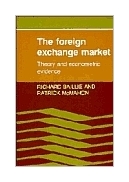
THE FOREIGN EXCHANGE MARKET THEORY AND ECONOMIC EVIDENCEBAILLIE R., MCMAHON Pwydawnictwo: CAMBRIDGE , rok wydania 2000, wydanie Icena netto: The flotation of exchange rates in the early 1970s saw a significant increase in the importance of foreign exchange markets and in the interest shown in them. Apart from the consequent institutional changes, this period also witnessed a revolution in macroeconomic analysis and finance theory based on the concept of rational expectations. This book provides an integrated approach to recent developments in the understanding of foreign exchange markets. It begins by charting the institutional background and looks at the recent history of movements in some of the major exchange rates. The theoretical sections focus on the economic and finance theory of the asset market approach, the macroeconomic models developed from this approach, and on interest rate parity theory. The empirical chapters draw on the authors' own research from a high quality set of exchange rate and interest rate data. The statistical properties of exchange rates are analysed; the relationship between spot and forward rates is examined; and the modelling and impact of new information on the forward and spot relationship is considered. The final chapter is devoted to the estimation and testing of exchange rate models. Contents1. Historical development and institutions 2. The theory of efficient markets 3. Models of exchange rate behaviour 4. Econometric methodology 5. Expectation models 6. Statistical properties of exchange rate series 7. The forward rate as a predictor of the future spot rate 8. Purchasing power and interest rate parity theories: empirical evidence 9. Exchange rate forecasting and conclusions 259 pages Księgarnia nie działa. Nie odpowiadamy na pytania i nie realizujemy zamówien. Do odwolania !. |