|
||

• wydawnictwa polskie
• Zamów informacje o nowościach z wybranego tematu • kontakt
• Cookies na stronie |
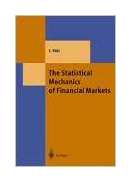
THE STATISTICAL MECHANICS OF FINANCIAL MARKETSVOIT J.wydawnictwo: SPRINGER , rok wydania 2003, wydanie IIcena netto: The Statistical Mechanics of Financial MarketsVoit, J., University of Bayreuth, Germany This book describes parallels between physics and finance - both those established in the 100-year-long interaction between these disciplines, as well as new research results on capital markets using statistical physics. The random walk, well known in physics, is also the basic model in finance, upon which are built, for example, the Black--Scholes theory of option pricing and hedging, or methods of risk control using diversification. The underlying assumptions are discussed using empirical financial data and analogies to physical models such as fluid flows, turbulence, or superdiffusion. On this basis, new theories of derivative pricing and risk control can be formulated. Computer simulations of interacting agent models of financial markets provide insights into the origins of asset price fluctuations. Stock exchange crashes can be modelled in ways analogous to phase transitions and earthquakes. These models allow for predictions. Keywords: Capital Markets, Random Walks, Financial Data, Turbulence From the reviews 220 pages Księgarnia nie działa. Nie odpowiadamy na pytania i nie realizujemy zamówien. Do odwolania !. |