|
||

• wydawnictwa polskie
• Zamów informacje o nowościach z wybranego tematu • kontakt
• Cookies na stronie |
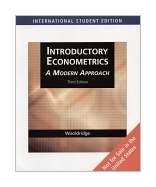
INTODUCTORY ECONOMETRICS A MODERN APPROACHWOOLDRIDGE J.wydawnictwo: THOMPSON , rok wydania 2006, wydanie IIIcena netto: The modern approach of this text recognizes that econometrics has moved from a specialized mathematical description of economics to an applied interpretation based on empirical research techniques. It bridges the gap between the mechanics of econometrics and modern applications of econometrics by employing a systematic approach motivated by the major problems facing applied researchers today. Throughout the text, the emphasis on examples gives a concrete reality to economic relationships and allows treatment of interesting policy questions in a realistic and accessible framework. How the book will help you in the course: Logical Progression: This text focuses first on multiple regression then leads in a straightforward manner to more advanced methods, such as simple panel data analysis and instrumental variables estimation. Data Sets- Available in Five Formats: Almost all of the data sets are available in ASCII, Excel, Stata, Minitab, and student version of Eviews (Eviews is available for packaging with the text) and come from actual research. Time Series/Cross-Section Analysis Flexibility: Time series and cross section analysis are not treated concurrently, but in a way that one can jump to time series analysis after covering the basics of regression with cross-section data. Systematic Approach: Wooldridge builds on topics throughout the book with his systematic approach, which introduces new assumptions only as needed and reduces student confusion, making it easy to move toward more advanced topics such as using pooled cross sections and applying instrumental variables methods. In-Depth Data Coverage: Panel data methods and other new models are covered in greater detail than in other texts. Glossary: Since the first edition, this text has included an extensive glossary which can be used as a helpful resource to students needing a refresher. The glossary includes several new entries for the third edition. A Foundation for Social Science Research: This text provides students with important knowledge used for empirical work and carrying out research projects in a variety of applied social science fields, some outside of economics (e.g., political science, criminology, etc.). Hot info you won't find in other editions: Summaries of Assumptions: Chapters 3, 4, 10, and 11 now include summaries of assumptions at the end of the chapter, providing students a reference for the assumptions and descriptions on how each is used. More Data Sets: The author has included more data sets to be used with end-of-chapter computer exercises. Access to these data sets is available on the book companion web site. More User Friendly: Empirical examples can now be replicated or found in published articles making them more helpful to students. Paperback, 890 pages Księgarnia nie działa. Nie odpowiadamy na pytania i nie realizujemy zamówien. Do odwolania !. |