|
||

• wydawnictwa polskie
• Zamów informacje o nowościach z wybranego tematu • kontakt
• Cookies na stronie |
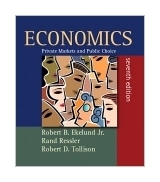
PRIVATE MARKETS AND PUBLIC CHOICEEKELUND R., RESSLER R., TOLLISON R.wydawnictwo: PEARSON , rok wydania 2005, wydanie VIIcena netto: Maximizing happiness means more than maximizing wealth, and yet many students assume economists only care about "the bottom line." Economics: Private Markets and Public Choice emphasizes that economics is, at its base, about our society's well-being and our individual happiness in all forms, not just profit. The authors teach students to apply economic concepts not only to key policy decisions like taxes, inflation, and free trade, but also to personal decisions such as household finance, marriage, and career choices. The Seventh Edition is enhanced by MyEconLab, the online homework system featuring automatically graded graphing problems and proven tutorial tools. Access to MyEconLab comes with every new textbook at no additional cost to the student. Features
Contents Part I The Power of Economic Thinking Chapter 1 Economics in Perspective Chapter 2 Opportunity Cost, Specialization, and Trade Chapter 3 Private Markets and Prices: Laws of Demand & Supply Chapter 4 Markets, Economic Welfare, and Politics Part II The Architecture of Private Markets Chapter 5 Elasticity Chapter 6 The Logic of Consumer Choice and Demand Chapter 7 The Firm and Costs of Production Chapter 8 Competitive Markets Chapter 9 Monopoly: The Firm as Industry Chapter 10 Imperfect Competition Part III Input Markets and Income Distribution Chapter 11 Competitive Labor Markets and Unions Chapter 12 Entrepreneurship and the Organization of Production Chapter 13 Income Distribution, Poverty, and Health Care Part IV Applied Microeconomics and Public Choice Chapter 14 Antitrust, Regulation, and Public Policy Chapter 15 Environmental Economics Chapter 16 Public Choice Part V The Fundamentals of Macroeconomics Chapter 17 Contemporary Macroeconomics Chapter 18 Measuring the Macroeconomy Chapter 19 Classical Macroeconomic Theory Chapter 20 Keynesian Macroeconomics Chapter 21 Aggregate Demand and Aggregate Supply Chapter 22 Fiscal Policy and the Supply Side: Using the Tools Chapter 23 Taxes, the Deficit, and the Debt Part VI Money Chapter 24 Money, Banking, and the Federal Reserve Chapter 25 Money and Inflation Part VII Macroeconomic Policy and Economic Growth Chapter 26 Macroeconomic Theory & Policy Chapter 27 Global Economic Growth and Development Part VIII International Trade and the Global Economy Chapter 28 International Trade Chapter 29 International Finance Glossary Credits Index Value pack, 797 pages Księgarnia nie działa. Nie odpowiadamy na pytania i nie realizujemy zamówien. Do odwolania !. |